
Ever wonder how your router actually delivers a packet to the right physical device? It’s not magic—it’s Address Resolution Protocol (ARP).
In a Cisco environment, ARP is the essential bridge between Layer 3 (IP) and Layer 2 (MAC). If this bridge breaks, connectivity dies, even if your routing table looks perfect.
I’ve put together a visual sketchnote summary covering:
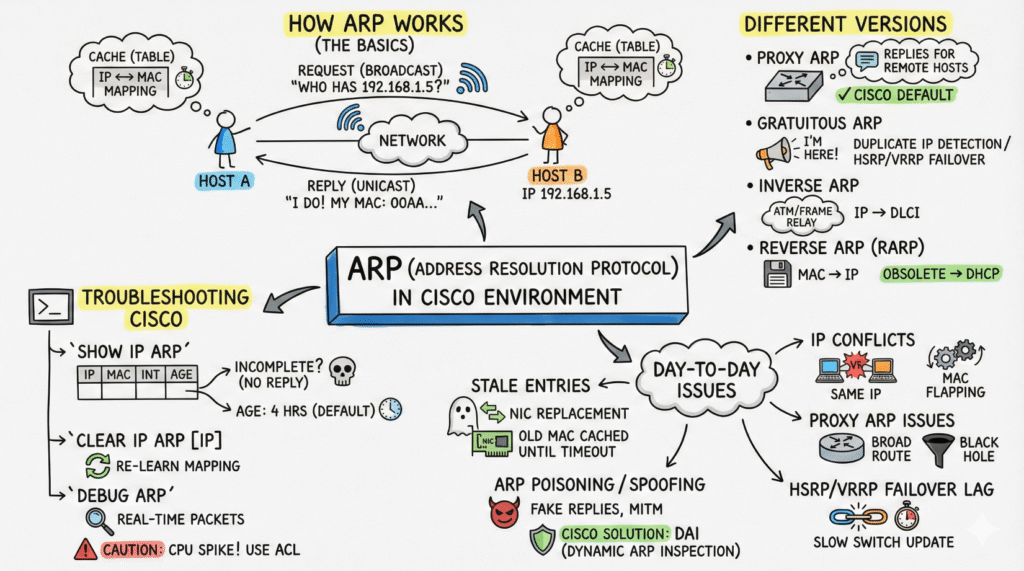
🚀 How it Works: The simple Request/Reply dance that maps IPs to hardware addresses. 🛠️ The Flavors: From Proxy ARP (Cisco’s default helping hand) to Gratuitous ARP (the secret behind HSRP/VRRP failovers). 🔍 Troubleshooting: The “must-know” commands like show ip arp and how to spot an “Incomplete” entry. ⚠️ Real-World Issues: Why “MAC flapping” causes IP conflicts and how Dynamic ARP Inspection (DAI) keeps your network secure.
Whether you’re studying for your CCNA or managing a data center, mastering ARP is non-negotiable for fast troubleshooting.
What’s the weirdest ARP issue you’ve ever run into in production? Let’s discuss in the comments! 👇